Chickenpox Before a Wedding: A Family Doctor's Reflection on Varicella, Vaccines, and Shingles
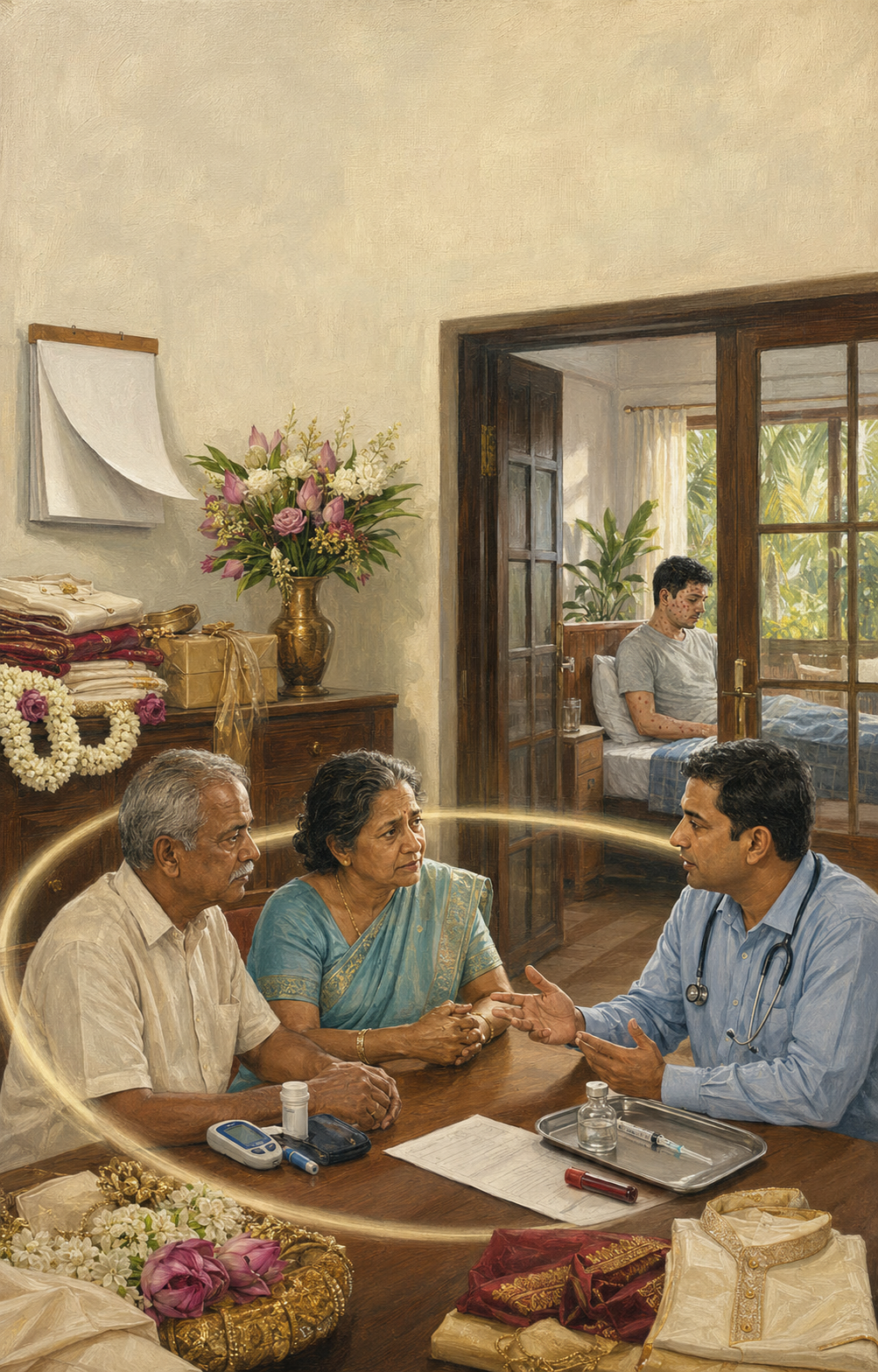

The wedding was only one week away.
The house was full of movement. Clothes had been arranged. Invitations had been sent. Relatives were arriving. Both families were busy with the final preparations.
Then the unexpected happened.
The bridegroom developed fever and a rash. At first, it looked like an ordinary viral illness. But soon the rash became more obvious — small itchy blisters appearing in crops over the body.
It was chickenpox.
In Sri Lanka, many people still call it “papola.”
For most families, chickenpox is thought of as a childhood illness. But when it appears in an adult, especially just before an important family event, it can create panic.
The wedding was postponed.
A few days later, the family came to see me.
“Doctor, should we get the chickenpox vaccine?”
There was anxiety in their voices. This was not only about the wedding anymore. They were worried about the whole family.
“Both my parents are diabetic,” Shehan said. “They can’t remember whether they had chickenpox before. Will they get chickenpox too? They won’t be able to handle it. Shall I get the chickenpox vaccine for them? If so, which one?”
These are very important questions.
A case of chickenpox in a household is not just a skin rash. It is a public health moment. It is a reminder that infection spreads through families, and that prevention matters.
What is chickenpox?
Chickenpox is caused by the varicella-zoster virus. It usually causes fever, tiredness, body aches, and an itchy blistering rash. The rash often appears in crops, meaning new lesions keep appearing over several days. Some spots may be red, some may become fluid-filled blisters, and others may crust over.
Chickenpox spreads very easily. It can spread through close contact, respiratory droplets, and contact with fluid from the blisters. A person with chickenpox can infect others from about one to two days before the rash appears until all the lesions have crusted.
This is why Shehan’s family was worried. By the time the rash is obvious, others may already have been exposed.
Is chickenpox always mild?
In children, chickenpox is often mild, although it can still be uncomfortable and occasionally complicated.
In adults, chickenpox can be more severe. Adults have a higher risk of complications such as pneumonia, secondary bacterial infection of the skin, dehydration, and rarely brain involvement. People with weak immune systems, pregnant women, newborn babies, and some elderly or chronically ill patients are at higher risk of severe disease.
Diabetes does not automatically mean a person will develop severe chickenpox, but diabetes can increase the risk of infections becoming complicated, especially if blood sugar control is poor. Therefore, when diabetic parents are exposed to chickenpox and cannot remember whether they had the illness before, the family doctor must take the concern seriously.
“Doctor, they can’t remember whether they had chickenpox before”
This is common.
Many adults do not know whether they had chickenpox as children. Some may have had it and forgotten. Some may have had a mild illness that was never diagnosed. Some may genuinely never have been infected.
In such situations, we need to ask: do they have evidence of immunity?
Evidence of immunity may include a clear history of previous chickenpox, documentation of previous varicella vaccination, or a blood test showing varicella-zoster IgG antibodies.
If the history is uncertain, a blood test can help. If varicella-zoster IgG is positive, it usually means the person has immunity from past infection or vaccination. If it is negative, the person may be susceptible.
This distinction matters because not everyone exposed to chickenpox needs vaccination or emergency preventive treatment. Those who are already immune are unlikely to develop chickenpox again.
Should exposed adults get the chickenpox vaccine?
The chickenpox vaccine is a live attenuated varicella vaccine. It is used to prevent chickenpox in people who are not immune.
If a person has been exposed to chickenpox and has no evidence of immunity, varicella vaccine can be helpful if given soon after exposure. Ideally, it should be given within three days of exposure, and it may still be useful up to five days after exposure. Even if it does not completely prevent the illness, it may reduce the severity.
But this depends on whether the person is eligible to receive a live vaccine.
The vaccine should not be given to certain groups, including pregnant women and people with significant immune suppression. It should also be used carefully after proper medical assessment in people with serious illness or those on immune-suppressing medication.
So the answer to Shehan’s question was not simply “yes” or “no.”
It was: “That depends.”
It depends on whether your parents are immune, when they were exposed, whether they have any contraindications to live vaccine, their current health status, their medications, and whether they are at high risk of severe disease.
Which vaccine?
The commonly used chickenpox vaccines are live attenuated varicella vaccines. In many countries and private-sector settings, brands may include vaccines such as Varilrix or Varivax, depending on availability.
For someone who is not immune, the usual varicella vaccination schedule for adolescents and adults is two doses, given several weeks apart according to the product and national recommendations.
But after exposure, the first question is timing. If the exposure was recent, post-exposure vaccination may be useful. If more time has passed, vaccination may not prevent this particular exposure, but it may still protect against future infection if the person remains uninfected.
The exact brand is less important than the correct indication, correct timing, correct dose schedule, and ensuring there are no contraindications.
What if they cannot receive the vaccine?
Some people cannot receive the live varicella vaccine. This includes pregnant women and people with significant immune suppression. Some high-risk exposed individuals may need varicella-zoster immunoglobulin, where available, or antiviral medication depending on timing, risk, and clinical judgment.
This is why self-prescribing a vaccine after exposure is not advisable.
A doctor should assess the patient, the exposure, immune status, pregnancy status, medications, and risk factors.
How long should the bridegroom isolate?
A person with chickenpox should avoid contact with others until all the lesions have crusted over. This is especially important to protect pregnant women, newborn babies, elderly people, people with weakened immune systems, and those who have never had chickenpox or vaccination.
This is one reason the wedding had to be postponed.
A wedding brings together many people. There may be pregnant women, small babies, elderly relatives, and people with medical problems. A chickenpox case in such a gathering can expose many vulnerable people.
Postponing the wedding may have been painful, but it was responsible.
Chickenpox and shingles: are they the same?
This is another area of confusion.
Chickenpox and shingles are caused by the same virus: varicella-zoster virus.
The first time a person is infected, the illness usually appears as chickenpox. After recovery, the virus does not completely disappear from the body. It remains dormant in the nerve roots.
Years later, especially with increasing age, stress, illness, or reduced immunity, the virus can reactivate. When it reactivates, it causes shingles, also called herpes zoster.
Shingles usually presents as a painful blistering rash on one side of the body, often in a band-like pattern. It may cause severe nerve pain. In some people, pain can continue long after the rash heals. This is called post-herpetic neuralgia.
So, chickenpox is the first infection. Shingles is reactivation of the same virus later in life.
Can a person catch shingles from someone?
A person does not “catch shingles” in the usual way from another person.
Shingles happens when a person’s own dormant varicella-zoster virus reactivates.
However, a person with shingles can spread the virus to someone who has never had chickenpox and has not been vaccinated. That exposed person may then develop chickenpox, not shingles.
This is important for families. A grandparent with shingles can potentially transmit varicella-zoster virus to an unvaccinated child or adult who has never had chickenpox.
Can chickenpox vaccine prevent shingles?
Chickenpox vaccination reduces the risk of chickenpox. It can also reduce the risk of later shingles compared with natural chickenpox infection, although shingles can rarely occur after vaccination.
There are also separate shingles vaccines for older adults in some countries. These are different from the childhood chickenpox vaccine. The shingles vaccine is designed to reduce the risk of herpes zoster and post-herpetic neuralgia.
This distinction matters:
The chickenpox vaccine is mainly to prevent primary varicella infection.
The shingles vaccine is mainly to prevent reactivation disease in older adults.
They are related, but they are not the same vaccine.
What should the family do after household exposure?
When chickenpox appears in a household, the family should act early.
First, confirm the diagnosis. Not every rash is chickenpox, but fever with crops of itchy blisters is highly suggestive.
Second, isolate the infected person until all lesions are crusted.
Third, identify vulnerable contacts: pregnant women, newborns, elderly relatives, immunocompromised people, and those with chronic illness.
Fourth, check who is immune and who is not. A reliable history of past chickenpox may be enough in many cases, but if uncertain, varicella-zoster IgG testing can help.
Fifth, for non-immune exposed people, discuss post-exposure vaccination as early as possible, ideally within three to five days.
Sixth, seek urgent medical care if the exposed person is pregnant, immunocompromised, elderly, very unwell, or has uncontrolled diabetes or other significant medical conditions.
What about Shehan’s diabetic parents?
In Shehan’s parents’ case, I explained that we needed to know three things.
Had they truly never had chickenpox?
How long ago were they exposed?
Were they medically suitable to receive a live varicella vaccine?
If they were not immune, if the exposure was recent, and if there were no contraindications, varicella vaccination could be considered. If they were high-risk or unable to receive the vaccine, other preventive options would need to be discussed urgently.
I also reminded the family that diabetes control matters. During infections, blood sugar can rise. Fever, poor appetite, dehydration, and stress can disturb glucose control. If a diabetic patient develops chickenpox, they should be reviewed early rather than waiting at home until complications develop.
Lessons from a postponed wedding
A postponed wedding is disappointing. But it can also prevent a larger problem.
The bridegroom’s chickenpox was not just a personal illness. It affected the family, the wedding, and the safety of guests. It forced the family to ask questions many people do not ask until a crisis happens.
Have I had chickenpox?
Am I immune?
Should adults get vaccinated?
Who is at risk if chickenpox enters a household?
What is the link between chickenpox and shingles?
These questions are worth asking before a wedding, before pregnancy, before travel, before caring for elderly parents, and before exposure occurs.
A simple message for families
Chickenpox is common, but it should not be taken lightly.
It spreads easily. It can be more serious in adults, pregnant women, newborns, and people with weakened immunity. Vaccination can prevent chickenpox or reduce its severity when given appropriately. After exposure, timing matters.
If you or a family member has never had chickenpox, or if you are unsure, speak to your doctor. Do not wait until a vulnerable person in the family is exposed.
Chickenpox and shingles are two faces of the same virus. Chickenpox is the first infection. Shingles is reactivation later in life.
For Shehan’s family, the wedding had to wait.
But the lesson was valuable.
Sometimes, one rash reminds an entire family that prevention is not only about protecting one person. It is about protecting everyone around them.
Key medical points: varicella vaccine can be used after exposure for people without evidence of immunity and without contraindications, ideally within 3 days and possibly up to 5 days; it may prevent disease or reduce severity. Chickenpox and shingles are both caused by varicella-zoster virus; shingles is reactivation, but a person with shingles can transmit VZV to a non-immune person, who may then develop chickenpox. The vaccine is live attenuated, so pregnancy and significant immunosuppression are important contraindication considerations