When Bones Become Fragile: A Story of Osteoporosis
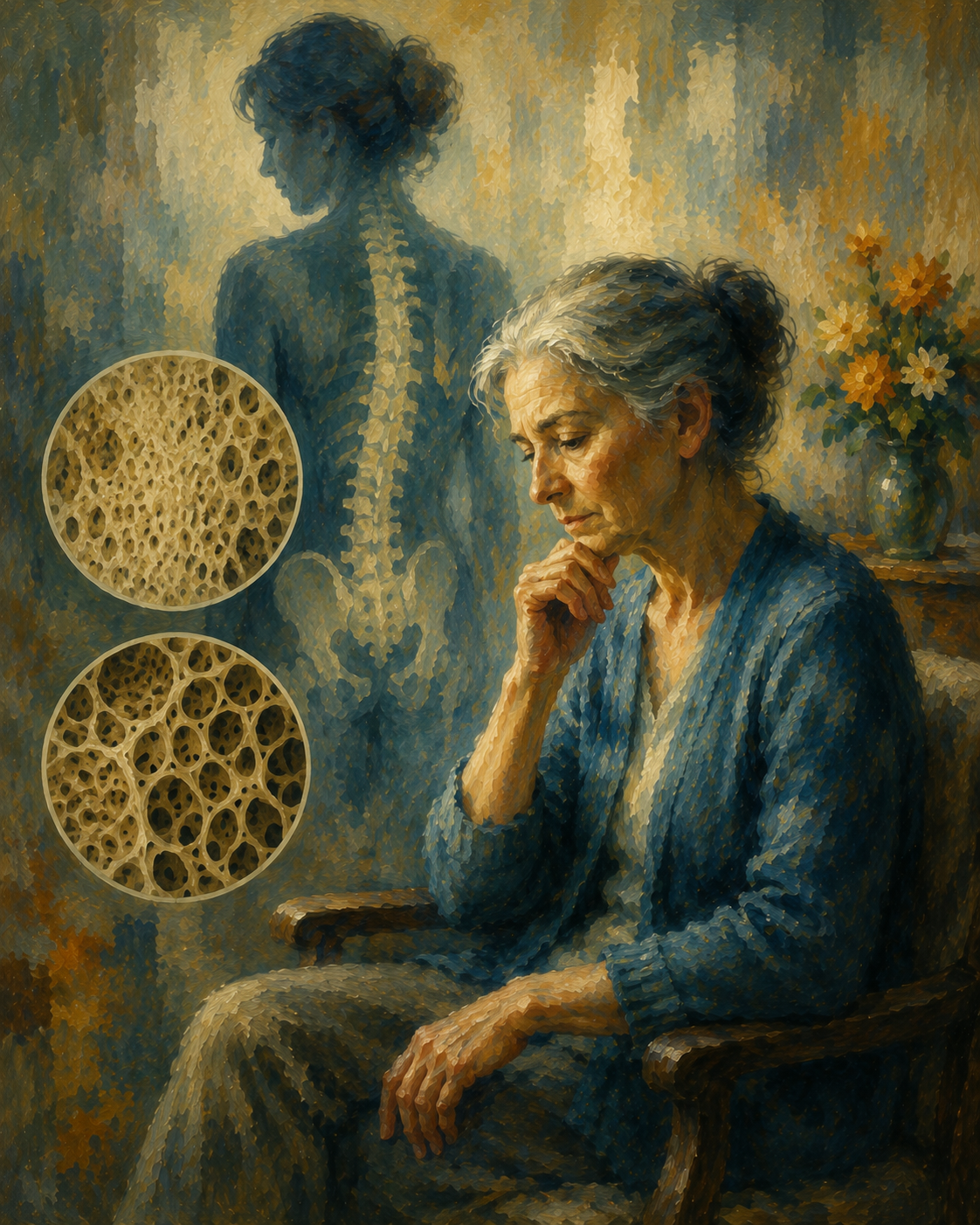
Mrs. Fernando was 72 when she slipped on the bathroom floor and fractured her hip. She had been healthy all her life — active, independent, never hospitalised. The fall was minor. The fracture was not.
It took me a long time to understand why her bones had become so fragile. The answer was a condition she had never heard of: osteoporosis.
What Is Osteoporosis?
Osteoporosis literally means "porous bones." Healthy bone looks like a dense honeycomb. In osteoporosis, the holes become larger, and the bone becomes weak and brittle — so fragile that a minor fall, or even a cough or sneeze in severe cases, can cause a fracture.
It is called a "silent disease" because it develops over many years without any symptoms. Most people do not know they have it until a bone breaks.
Who Is at Risk?
Osteoporosis is most common in older adults, especially women after menopause. When oestrogen levels fall, bone loss accelerates. But it is not only a women's disease — men get it too, though usually later in life.
Risk factors include:
- Age over 50
- Family history of fractures
- Low body weight
- Smoking and excessive alcohol
- Long-term steroid use
- Sedentary lifestyle
- Low calcium and vitamin D intake
- Early menopause
Why Is It Underdiagnosed?
In Sri Lanka, osteoporosis is significantly underdiagnosed. Many people consider a fracture in an older person to be an inevitable part of ageing. "She is old, of course her bones broke," families say. But a fracture in a 70-year-old after a minor fall is not normal — it is a warning sign.
A simple test called a DEXA scan measures bone density. It is painless, quick, and widely available. Yet very few of my older patients have had one unless they have already fractured.
Prevention Starts Early
Bone density peaks around age 30. After that, we slowly lose bone. So the best time to build strong bones is in childhood, adolescence, and early adulthood — through adequate calcium, vitamin D, and weight-bearing exercise.
But it is never too late to slow bone loss:
- Calcium: 1,000–1,200 mg daily from food (dairy, leafy greens, small fish with bones) or supplements if needed.
- Vitamin D: 15–20 minutes of sunlight on exposed skin daily, plus dietary sources like oily fish and eggs.
- Exercise: Walking, jogging, dancing, resistance training — anything that makes bones bear weight stimulates them to stay strong.
- Avoid smoking and limit alcohol.
Treatment
For those already diagnosed, treatment includes lifestyle measures plus medication. Bisphosphonates are the most commonly prescribed drugs — they slow bone breakdown. Other options exist depending on individual risk and kidney function.
Treatment is usually long-term and should be monitored with repeat DEXA scans and blood tests.
The Lesson from Mrs. Fernando
Mrs. Fernando recovered from her fracture, but she lost her independence for nearly a year. She moved in with her daughter. She could no longer walk to the temple or tend her garden. A condition she had never heard of had changed her life.
If you are over 50, ask your doctor about a bone density test. If your mother or grandmother had a fracture after a minor fall, take it seriously — it may run in the family. And if you are younger, start building your bone bank now. Every glass of milk, every walk in the sun, every step on the road — it all adds up.
Your bones are silent, but they remember everything you do — and everything you don't.